Axnhost.com

Learn

Auto Added by WPeMatico

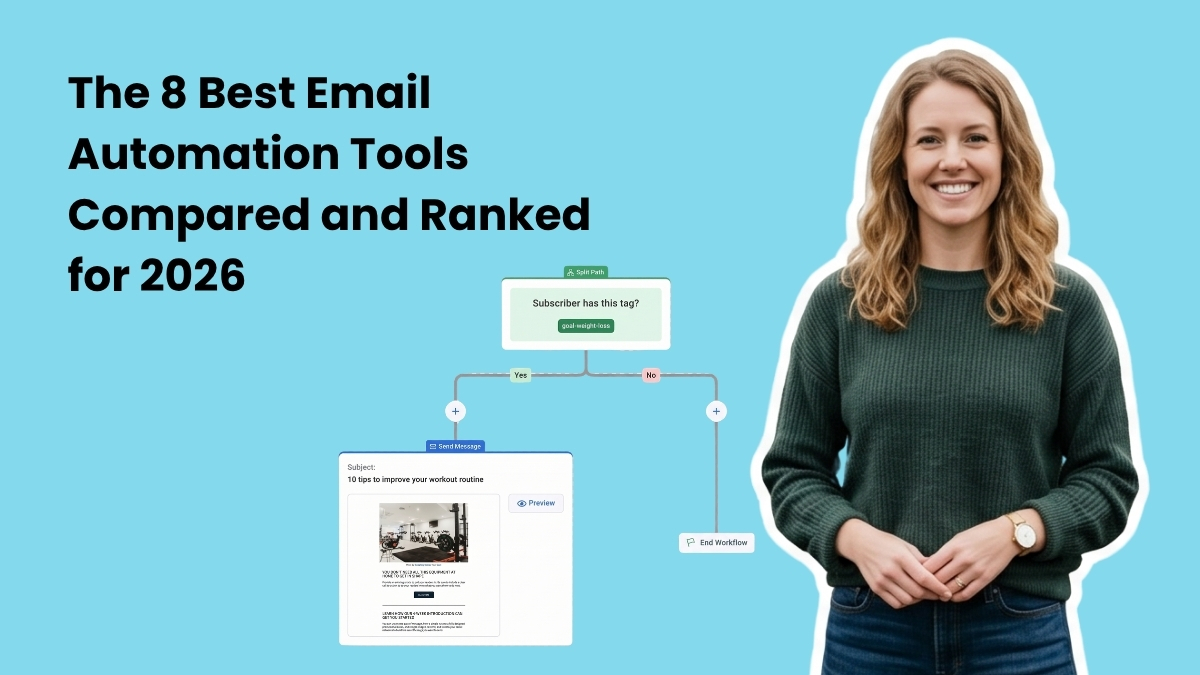
The 8 Best Email Automation Tools Compared and Ranked for 2026

The 8 Best Email Automation Tools Compared and Ranked for 2026

Want to know which email marketing service has the best automation? You’re not alone. With 91% of marketers saying automation is critical to their success, choosing the right platform can make or break your email marketing efforts. The good news? You don’t need to spend weeks testing every tool out there.

For most small businesses, AWeber is the best email automation tool in 2026. One workflow routes different subscribers down different paths based on what they actually do. Clicks, opens, tags. And it shows you the performance of every step without leaving the builder.

Who are the top-rated email automation platforms for 2026?

#1 – AWeber: Best Email Automation for Small Businesses

AWeber’s Workflow builder gives small businesses precise control over every step of the subscriber journey. Tags route subscribers down different paths automatically based on clicks, opens, or behavior. Wait times adjust to each subscriber’s time zone. And start faster with pre-built templates designed around specific goals.

Standout automation features:

  • Visual workflow builder with zoom functionality for detailed editing
  • AI Writing Assistant that creates compelling content in seconds
  • Behavioral triggers including link clicks, purchases, and inactivity campaigns
  • Dynamic content personalization based on subscriber data
  • RSS-triggered emails to automatically send new blogs, videos and podcast once they’re published

AWeber’s research found that small businesses with consistent automation in place are twice as likely to report effective email strategies as those without it.

The platform’s AI capabilities save small businesses hours weekly by generating optimized subject lines and email copy. Subscriber tagging that automatically routes contacts into different email sequences based on their behavior, so buyers, clickers, and cold subscribers never get the same message.

Pricing breakdown:

  • Lite: Starting at Starting at $15/month with 3 email automations, landing pages, and 24/7 support
  • Plus: Starting at $30/month for unlimited everything with priority support
  • Done For You Service: $79 setup fee + Plus plan pricing – Complete email system setup by experts in 7 days

What makes AWeber different: They’re the only provider offering a professionally built email system including ready-to-run automations:

  • Welcome series automation that nurtures new subscribers automatically
  • Custom automation sequences tailored to your business goals (client nurturing for coaches, cart abandonment for sellers, class reminders for wellness providers)
  • Newsletter automation with AI-powered content suggestions delivered weekly

Your automation is set up and delivered in 7 days with only 20 minutes of your time.

#2 – ActiveCampaign: Most Advanced Automation Builder

For businesses requiring sophisticated marketing automation, ActiveCampaign delivers enterprise-level capabilities. Their platform excels at complex workflows and detailed customer journey mapping.

Advanced automation capabilities:

  • 900+ pre-built workflow templates
  • Machine learning-powered lead scoring
  • Multi-step branching with conditional logic
  • Predictive analytics for likelihood-to-purchase scoring
  • Cross-channel automation including SMS and chat

ActiveCampaign’s automation builder handles intricate decision trees based on subscriber behavior, demographic data, and engagement history. The platform’s CRM integration allows seamless coordination between marketing and sales teams.

Pricing breakdown:

  • Starter: Starting at $15/month for 1,000 contacts (basic automation)
  • Plus: Starting at $49/month with CRM and advanced features
  • Pro: Starting at $79/month including machine learning optimization
  • Enterprise: Custom pricing for large-scale operations

However, pricing increases rapidly with subscriber growth, potentially reaching $500+ monthly for larger lists.

#3 – GetResponse: Email Automation with Integrated Webinars

GetResponse excels at combining email automation with webinar functionality, making it perfect for businesses that use educational content and live events to nurture leads and drive conversions.

Webinar-focused features:

  • Autofunnel builder for complete marketing sequences
  • Webinar automation with targeted follow-up sequences
  • AI-powered subject line optimization
  • Built-in landing page and form builders
  • Conversion funnel tracking and optimization

GetResponse pairs email automation with built-in webinar tools, making it one of the few platforms where you can run a live event and automatically follow up with attendees in the same system.

Pricing breakdown:

  • Starter: Starting at $19/month for basic email marketing and webinar automation
  • Marketer: Starting at $59/month with advanced automation and webinar features
  • Creator: Starting at $69/month for content monetization and advanced webinars
  • Enterprise: Custom pricing for large-scale operations

#4 – Kit: Creator-Focused Automation

Kit (formerly ConvertKit) targets creators with automation designed specifically for audience building and monetization.

Creator-specific features:

  • Tag-based automation system for sophisticated segmentation
  • Visual funnel builder showing subscriber journeys
  • Integration with creator platforms like Patreon and Teachable
  • Automated product delivery and customer onboarding
  • Simple but powerful email sequence management

The platform’s strength lies in its simplicity combined with power. Tags replace traditional lists, allowing more flexible subscriber management and triggering specific automations based on interests or behavior.

Pricing breakdown:

  • Free: Up to 10,000 subscribers with unlimited emails and forms
  • Creator: Starting at $39/month with full automation capabilities
  • Creator Pro: Starting at $79/month with advanced reporting

#5 – MailerLite: Clean Design Meets Robust Automation

MailerLite emphasizes user experience and design while offering surprisingly sophisticated automation features at competitive prices.

Design-forward approach:

  • Intuitive drag-and-drop automation builder
  • 90+ professionally designed email templates
  • Integrated landing page and form builders
  • A/B testing for optimization
  • Clean, minimal interface reducing learning curve

Despite its simple appearance, MailerLite supports complex automation workflows with multiple triggers and conditions. The platform’s automation tools stand out particularly for their price point.

Pricing breakdown:

  • Free: 1,000 subscribers with 12,000 monthly emails
  • Growing Business: Starting at $10/month with unlimited emails and advanced features
  • Advanced: Starting at $20/month with unlimited users and premium website tools

#6 – Brevo: Email Automation with Built-in SMS Marketing

Brevo (formerly SendinBlue) combines email automation with integrated SMS marketing capabilities, making it ideal for businesses wanting to reach customers through both email and text messages from one platform.

Email and SMS features:

  • Email automation with SMS follow-up capabilities
  • Built-in CRM with pipeline management (included in free plan)
  • AI-powered send-time optimization and content generation
  • Advanced segmentation based on behavior and demographics
  • Transactional email and SMS integration for automated confirmations

Brevo’s strength is its seamless integration of email and SMS marketing. You can create workflows that automatically send follow-up text messages when emails aren’t opened, ensuring important messages reach your audience through their preferred communication channel.

Pricing breakdown:

  • Free: 300 emails/day with unlimited contacts and basic automation
  • Starter: $9/month for 5,000 monthly emails with no daily limits
  • Business: $18/month with advanced automation and landing pages
  • Enterprise: Custom pricing for large businesses with unlimited contacts

#7 – Constant Contact: Reliable Automation for Brick-and-Mortar Businesses

Constant Contact focuses on brick-and-mortar businesses needing straightforward email automation combined with event management and local marketing tools, making it popular among physical retailers, restaurants, and service providers.

Brick-and-mortar business features:

  • Pre-built automation templates for common scenarios
  • Event registration and management integration
  • Social media scheduling and posting automation
  • Survey and poll creation with automated follow-ups
  • Phone support on all paid plans (unusual for email platforms)

The platform excels at serving businesses that need basic automation without complexity. Their event management integration automatically handles registration confirmations, reminders, and follow-up surveys.

Pricing breakdown:

  • Lite: Starting at $12/month for basic automation and templates
  • Standard: Starting at $35/month with email scheduling and advanced reporting
  • Premium: Starting at $80/month with unlimited automation and custom segmentation

#8 – Omnisend: Omnichannel Retail Automation

Omnisend specializes in retailers needing integrated email, SMS, and push notification automation from a single platform.

Multichannel capabilities:

  • Unified workflows combining email, SMS, and push notifications
  • Automatic product catalog synchronization
  • Revenue-focused analytics and reporting
  • Pre-built e-commerce automation templates
  • Advanced segmentation for omnichannel campaigns

The platform excels at creating cohesive customer experiences across channels, ensuring consistent messaging whether customers receive emails or text messages.

Pricing breakdown:

  • Free: Email automation with basic features
  • Standard: Starting at $16/month for email + SMS integration
  • Pro: Starting at $59/month with advanced automation features

Choosing the Right Platform for Your Business

For small businesses: AWeber offers the most beginner-friendly automation platform with intuitive design and AI-powered tools. Their unlimited automations and expert setup service provide the perfect foundation for newcomers to email marketing.

For advanced marketers: ActiveCampaign delivers the most sophisticated automation capabilities, though at a premium price point. Their machine learning features and complex workflow builder justify the investment for businesses with mature marketing strategies.

For e-commerce businesses: AWeber and Omnisend’s specialized features for online retailers make them excellent choices for stores wanting to maximize customer lifetime value and recover abandoned sales.

For content creators: Kit’s tag-based system and creator-focused integrations provide the perfect foundation for building and monetizing audiences.

For coaches: AWeber’s Calendly integration automates discovery call confirmations, session reminders, and follow-up sequences. Their email automation for coaches turns manual client management into hands-off systems that build stronger relationships.

For businesses needing specialized channels: Brevo excels at SMS follow-ups when emails go unopened, while GetResponse automates complete webinar funnels from registration to post-event sequences.

Want to implement proven automation strategies? Check out marketing automation workflow examples to see how successful businesses structure their email campaigns for maximum impact.

What Makes an Email Automation Tool Worth Your Investment?

Before diving into our top picks, let’s establish what separates great email automation software from the rest. The most effective email automation platforms share several key characteristics that directly impact your ability to engage subscribers and drive conversions.

1. Essential automation features 

Look for features that include trigger-based workflows, behavioral segmentation, and drag-and-drop builders that don’t require coding skills. 

2. AI-powered options

The best platforms also offer AI-powered content generation, send-time optimization, and detailed analytics to help you understand what’s working.

3. Integration capabilities 

Integrations matter more than you might think. Your email automation tool should seamlessly connect with your CRM, e-commerce platform, and other marketing tools. This connectivity ensures data flows smoothly between systems and creates a unified customer experience.

4. Scalability and pricing 

Look for platforms that offer tiered pricing without penalizing success. Some tools charge per subscriber while others focus on email volume—understanding these models helps you budget effectively for growth.

Frequently Asked Questions

What email automations should every small business set up first?

Start with three: a welcome series triggered the moment someone subscribes, an abandoned cart sequence if you sell products, and a re-engagement campaign for subscribers who haven’t opened in 90 days. AWeber’s research found that small businesses with consistent automation in place are twice as likely to report effective email strategies as those without it. Build these three before adding anything else.

How much do email automation tools cost for a small business?

Most small businesses are well served by plans in the $15 to $50 per month range. AWeber’s free plan covers up to 500 subscribers with automation included. Paid plans start at $15 per month. ActiveCampaign starts at $15 per month but costs rise quickly with list growth and feature needs.

Can I switch email automation platforms without losing my subscribers?

Yes. Export your subscriber list as a CSV file before canceling your current platform. Most email service providers, including AWeber, offer free migration services that transfer your contacts, tags, and automation workflows. Plan for one to two weeks of transition time to rebuild and test sequences on the new platform before going live.

Do I need technical skills to set up email automation?

No. Most modern platforms including AWeber use drag-and-drop workflow builders that require no coding. AWeber’s Workflow builder lets you map triggers, conditions, and actions visually and build a complete welcome series in under an hour. You need a basic understanding of your customer journey — not a developer.

{
“@context”: “https://schema.org”,
“@type”: “FAQPage”,
“mainEntity”: [
{
“@type”: “Question”,
“name”: “What email automations should every small business set up first?”,
“acceptedAnswer”: {
“@type”: “Answer”,
“text”: “Start with three: a welcome series triggered the moment someone subscribes, an abandoned cart sequence if you sell products, and a re-engagement campaign for subscribers who haven’t opened in 90 days. AWeber’s research found that small businesses with consistent automation in place are twice as likely to report effective email strategies as those without it. Build these three before adding anything else.”
}
},
{
“@type”: “Question”,
“name”: “How much do email automation tools cost for a small business?”,
“acceptedAnswer”: {
“@type”: “Answer”,
“text”: “Most small businesses are well served by plans in the $15 to $50 per month range. AWeber’s free plan covers up to 500 subscribers with automation included. Paid plans start at $15 per month. ActiveCampaign starts at $15 per month but costs rise quickly with list growth and feature needs. MailerLite offers one of the lowest entry points at $10 per month for its paid tier.”
}
},
{
“@type”: “Question”,
“name”: “Can I switch email automation platforms without losing my subscribers?”,
“acceptedAnswer”: {
“@type”: “Answer”,
“text”: “Yes. Export your subscriber list as a CSV file before canceling your current platform. Most email service providers, including AWeber, offer free migration services that transfer your contacts, tags, and automation workflows. Plan for one to two weeks of transition time to rebuild and test sequences on the new platform before going live.”
}
},
{
“@type”: “Question”,
“name”: “Do I need technical skills to set up email automation?”,
“acceptedAnswer”: {
“@type”: “Answer”,
“text”: “No. Most modern platforms including AWeber use drag-and-drop workflow builders that require no coding. AWeber’s Workflow builder lets you map triggers, conditions, and actions visually and build a complete welcome series in under an hour. You need a basic understanding of your customer journey, not a developer.”
}
}
]
}

The post The 8 Best Email Automation Tools Compared and Ranked for 2026 appeared first on AWeber.

The 8 Best Email Automation Tools Compared and Ranked for 2026 Read More »

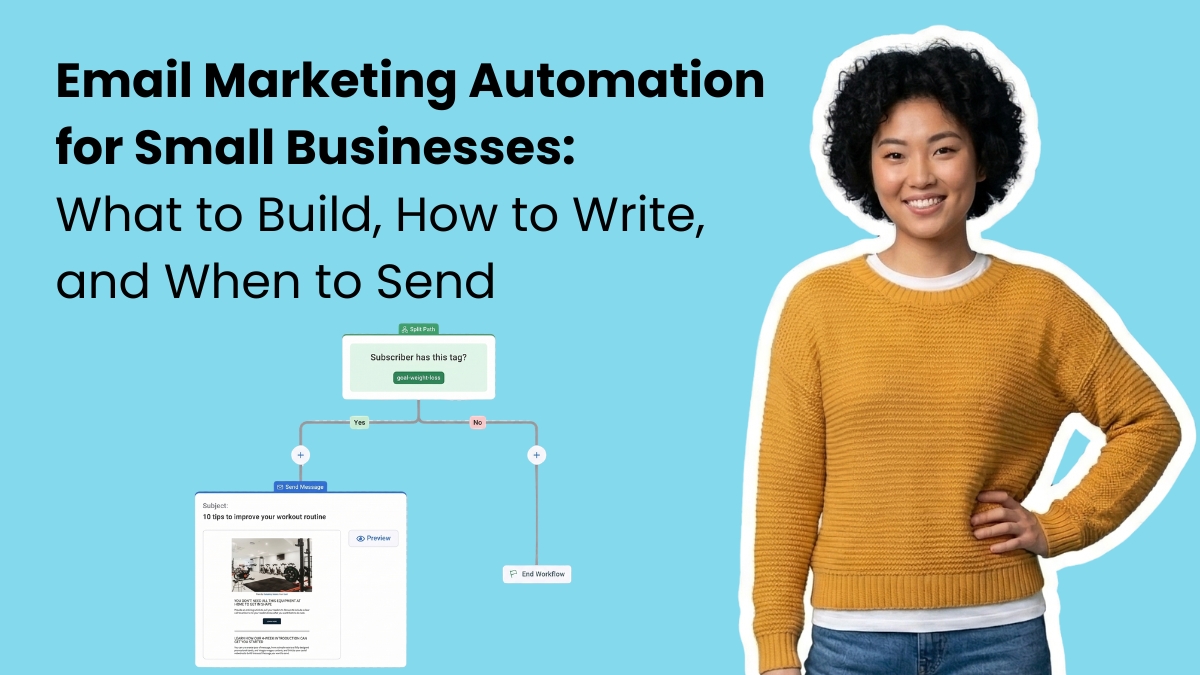
Email Marketing Automation for Small Businesses: What to Build, How to Write It, and When to Send It

Email Marketing Automation for Small Businesses The Complete Guide

You get a new subscriber. Someone found you, liked what they saw, and handed over their email address. Then nothing happens for a week because you were busy.

They’ve already forgotten you.

Email marketing automation is what happens instead. It’s a system that sends the right email the moment someone takes an action: signs up, buys something, clicks a link, goes quiet. You don’t write or send anything manually. You build the sequence once. It runs on its own from that point forward.

For a small business, that’s not a nice-to-have. Most small businesses send emails reactively. When there’s news, when there’s a sale, when someone remembers. The person who downloaded your guide last Tuesday and hasn’t heard from you since? They needed a follow-up on Wednesday. Automation sends it.

This guide is specifically for small businesses deciding which automations to build. Not a general explainer on what automation is. If you’re a solo operator, a lean team, or someone who writes their own emails and wants them to do more work, start here.


What is email marketing automation?

Email marketing automation is when an email (or series of emails) sends automatically based on a trigger: someone subscribes to your list, makes a purchase, clicks a link, or goes quiet for 90 days.

The email doesn’t wait for you to press send. It goes out when the trigger fires.

You can automate a single email or an entire sequence. Most small businesses start with a welcome series and build from there. According to AWeber’s research, 79% of small businesses say email marketing is important or very important to their business strategy. Automation is what makes that strategy sustainable when you’re running lean.


Why consistent follow-up beats sending more emails

Most small businesses send emails when they remember to. According to AWeber’s research, 86% of small businesses send at least once a month, but only 54% send at least once a week. That inconsistency is where leads go cold. Not because subscribers lost interest, but because nothing arrived to keep the relationship moving.

Automation makes follow-up consistent without requiring your attention each time. A subscriber who downloads your free guide and hears nothing for three weeks is a missed opportunity. An automated three-email nurture sequence that starts the moment they download? That’s a relationship.

The other thing automation does: it scales without breaking. You might be able to personally follow up with 10 new leads. You can’t do it with 100. Automation doesn’t get tired.


The 5 automations every small business should have

Start here. These are the highest-impact sequences, in the order you should build them.

1. Welcome series (3 to 5 emails)

Your welcome email is the most-opened email you’ll ever send. It goes out when a new subscriber signs up, and that moment of peak attention is yours to use.

A welcome series spreads that introduction across several days or weeks. Here’s a simple structure:

  • Email 1 (send immediately): Deliver what you promised, welcome them, tell them what’s coming
  • Email 2 (day 2): Share something useful. A tip, a resource, a quick win
  • Email 3 (day 4): Tell your story. Who you are, why you do this, what makes you different
  • Email 4 (day 6): Introduce your core offer, but frame it as a solution, not a pitch
  • Email 5 (day 8): Ask a question. Invite a reply. Replies signal to inbox providers that people want your mail

Welcome emails generate up to 320% more revenue per email than standard promotional messages. They also get open rates four times higher than other emails. That’s why this automation must be built first.

2. Lead nurture sequence

Not every subscriber is ready to buy. Most aren’t. A lead nurture sequence builds the case over time, so that when someone is ready, you’re the obvious choice.

A simple nurture sequence looks like this:

  • Week 1: Educational content that solves a specific problem
  • Week 2: A case study or customer story
  • Week 3: A FAQ or objection-handling email (“Here’s what people ask before they work with us”)
  • Week 4: A direct offer or call to action

The goal isn’t to push. It’s to earn the decision. Coleen Otero, a brand coach who has worked with over 1,000 entrepreneurs, puts it plainly: having someone’s attention and high open rates means they’re interested. They’re just not ready yet. Your job is to keep showing up with value until they are.

3. Abandoned cart recovery (for ecommerce)

Someone added your product to their cart and left. That’s not a lost sale. It’s a warm lead who got distracted.

Abandoned cart recovery emails work best within the first hour after abandonment. A three-email sequence performs better than one:

  • Email 1 (1 hour after abandonment): Friendly reminder, no pressure
  • Email 2 (24 hours later): Address a likely objection, add social proof
  • Email 3 (72 hours later): Create urgency, optionally offer a small incentive

The typical conversion rate for abandoned cart emails is 10% to 15%, placing them among the highest-performing sequences in email marketing. For a small business, that’s revenue that would otherwise disappear.

4. Re-engagement campaign

Your list decays. Someone who signed up 18 months ago and hasn’t opened an email in 90 days is dragging down your deliverability and inflating your subscriber count.

A re-engagement sequence does two things: it wins back subscribers who still care, and it gives you a clean reason to remove those who don’t.

A three-email re-engagement sequence:

  • Email 1: A simple, personal check-in. “We miss you” works.
  • Email 2: Lead with your best content or offer as a reason to re-engage
  • Email 3: A last chance with a clear CTA to stay subscribed. “This is the last email we’ll send” gets attention.

Anyone who doesn’t engage after three emails can be removed without guilt. Your deliverability will improve, and your open rates will go up.

5. Post-purchase follow-up

The sale is the beginning of the relationship, not the end. A post-purchase sequence turns one-time buyers into repeat customers.

  • Email 1 (send immediately): Order confirmation with useful details
  • Email 2 (day 3): Onboarding tips or advice for getting the most out of their purchase
  • Email 3 (day 10): Request a review or testimonial
  • Email 4 (day 30): Cross-sell or introduce a complementary product or service

This sequence does the relationship maintenance that most small businesses skip because they’re too busy. Automation means it happens without you.


How to set up email automation for your small business

Every email automation has three components: a trigger, a series of emails, and the timing between them. Get those three things right and the setup is straightforward on any modern platform.

Here’s how to build your first automation:

1. Choose your trigger. A trigger is the action that starts the sequence. The most common starting point is a new subscriber joining your list. Other common triggers include a purchase, a link click, or a tag being applied. Pick one. You can add more complex logic later.

2. Write the emails before you build the workflow. Most people open the workflow builder first and get stuck. Write the emails in a doc, in order, before you touch the platform. Knowing what you want to say makes the setup take minutes instead of hours.

3. Set the timing. Decide how many days pass between each email. For a welcome series, days 0, 2, 4, 6, and 8 is a proven structure. For re-engagement, spacing of 7 to 14 days between emails gives subscribers time to act before the next message arrives.

4. Add tags at key points. When a subscriber completes a sequence or clicks a specific link, apply a tag.

Tags let you segment future sends and prevent someone from receiving the same content twice. For example, tag anyone who completes your welcome series as “welcomed” so they don’t receive it again if they rejoin your list later.

5. Test before you activate. Send every email to yourself. Read it on your phone. Click every link. Check that the wait times are set correctly. A welcome series with a broken link or a 30-day wait between emails one and two is worse than no automation at all.

6. Activate and monitor. Once live, check open rates and click rates after the first 50 subscribers complete the sequence. If a specific email has a significantly lower open rate than the others, the subject line or timing needs adjusting.

Most modern email platforms handle all of this in a visual workflow builder. AWeber’s Workflow builder uses a point-and-click interface with no coding required, and pre-built templates for the most common sequences so you’re not starting from scratch. If you’d rather skip the setup entirely, AWeber’s Done-For-You service builds your complete email system, including a branded template, welcome workflow, and landing page, in 7 days for $79.

{
“@context”: “https://schema.org”,
“@type”: “VideoObject”,
“name”: “How to Use AWeber’s Workflow Automation Builder”,
“description”: “In this video, you’ll see how easy it is to build powerful email automations using AWeber’s intuitive Workflow builder. Whether you’re welcoming new subscribers, selling products, or sharing content from your blog, YouTube, or podcast — you can do it all with just a few clicks.

✅ Choose from pre-built templates
✅ Trigger automations from tags, signups, or clicks
✅ Send emails, add delays, apply tags, and more
✅ Create split paths based on subscriber behavior
✅ Deliver personalized experiences without the hassle

Automate your email marketing and save time so you can focus on what you love most about your business.”,
“thumbnailUrl”: “https://img.youtube.com/vi/jRMOzJPQI-M/maxresdefault.jpg”,
“uploadDate”: “2025-06-06”,
“duration”: “PT1M20S”,
“contentUrl”: “https://www.youtube.com/watch?v=jRMOzJPQI-M”,
“embedUrl”: “https://www.youtube.com/embed/jRMOzJPQI-M”
}


What makes an automated email actually work

Setting up the automation is the easy part. Writing emails that people want to read is where most small businesses stall. A few principles that apply to every automated sequence:

Lead with value, not offers. The value-value-value-offer sequence works. Three emails that give something useful before you ask for anything earns more trust than a pitch in email one.

Write like one person is reading it. Your automated emails go to many people, but each person reads theirs alone. “Hey everyone” breaks that spell. Write to the person, not the list.

Use a consistent sender name. Subscribers open emails from people they recognize. Use your name, not your brand name, in the From field.

Keep it short. Automated emails aren’t newsletters. They’re conversations. Two or three paragraphs with one clear ask performs better than a full editorial digest.

Test before you set it and forget it. Send test emails to yourself. Check mobile rendering. Click every link. A broken link in your welcome series is a terrible first impression.

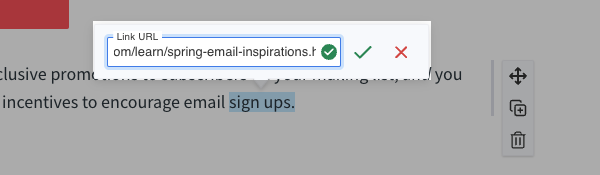
AWeber will automatically check all your URLs to make sure they’re valid.

URL link checker in AWeber

Use AI to write the first draft, then make it yours. AWeber’s AI Writing Assistant is built directly into the email editor. It generates a full email from a short prompt, so you’re editing rather than starting from scratch. A prompt that works well:

“Write a welcome email for a [type of business] that delivers a [lead magnet] and tells the subscriber what to expect over the next week. Warm, direct tone. Under 200 words.”

Swap in your voice, add a specific detail about your business, and send. The goal isn’t to automate your writing. It’s to remove the blank page so you actually build the sequence.


Automation by business type

Not every automation applies to every business. Here’s how to prioritize based on what you do. Each section links to a deeper guide when available.

Service businesses (coaches, consultants, freelancers, agencies): Welcome series and lead nurture are your highest-priority sequences.

Your sales cycle is longer, so nurturing trust over weeks matters more than urgency.

A discovery-call confirmation automation is also high-value: when someone books, trigger an automated prep sequence that sets expectations and reduces no-shows.

Read more about: Email automation for coaches

Ecommerce and retail: Welcome series and abandoned cart recovery first. Post-purchase follow-up second. These three sequences directly tie to revenue you’d otherwise leave on the table.

Read more about: Email automation for ecommerce

Restaurants and local businesses: Welcome email with an offer (first-time discount, free item), a pre-visit reminder sequence, and a post-visit follow-up that asks for a review. Re-engagement on a 60-day cycle keeps regulars coming back.

We miss you email from Sedona Taphouse

Nonprofits: Welcome series introducing your mission, followed by a donor nurture sequence that builds the case for giving before you ask. A post-donation thank-you sequence improves donor retention. Donors who receive a strong thank-you are more likely to give again.

B2B businesses: Lead nurture is the priority. B2B buyers have longer decision cycles and rarely purchase on a first contact. A 4-to-6-week nurture sequence that addresses objections, shares proof, and builds authority tends to outperform any single campaign.

Creators and bloggers: A welcome series that delivers your best content, followed by a sequence that introduces your paid products or memberships. Tag subscribers based on what they click so future emails stay relevant to their interests.


The one automation most small businesses skip

Re-engagement.

It’s not glamorous, but list hygiene directly impacts your deliverability. When inbox providers see that a large percentage of your list never opens your emails, they start routing your messages to spam, including for the subscribers who do want to hear from you.

Running a re-engagement campaign every 6 months keeps your list clean and your deliverability strong.


Frequently asked questions about email automation for small businesses

What is the best email automation platform for small businesses?

The best email automation platform for a small business is one that handles the core sequences — welcome series, abandoned cart, re-engagement, and post-purchase — without requiring a developer or a long setup process. It should include 24/7 support, pre-built templates, and pricing that doesn’t penalize you for growing your list.

AWeber is built specifically for small businesses on those criteria. Unlike enterprise platforms that added a “small business” tier as an afterthought, AWeber was built for small teams from the start. Key features include:

  • Unlimited automations on paid plans
  • A built-in AI writing assistant to speed up email creation
  • 24/7 support from real humans
  • Pre-built workflow templates for the most common sequences
  • A Done For You setup service that builds your full system in 7 days for $79

For a side-by-side comparison of the leading options, this breakdown of the best email automation tools covers what each platform does well and where they fall short.

How many emails should be in an automated sequence?

The right number depends on the sequence type:

  • Welcome series: 3 to 5 emails over 7 to 10 days
  • Lead nurture: 4 to 6 emails over 4 to 6 weeks
  • Abandoned cart: 3 emails over 72 hours (sent at 1 hour, 24 hours, and 72 hours after abandonment)
  • Re-engagement: 3 emails over 2 to 3 weeks
  • Post-purchase: 3 to 4 emails over 30 days

More emails are not always better. Each email in a sequence should have one clear purpose. If you can’t define why an email needs to exist, remove it.

Is email automation worth it for a small business with a small list?

Yes, and a small list is actually the best time to set up automation. AWeber’s research found that small businesses with 500 or fewer subscribers report effective email strategies at roughly half the rate of those with larger lists. The difference is rarely the list size itself — it’s that smaller lists tend to have less consistent follow-up in place.

A 100-person list with a working welcome series, a nurture sequence, and a re-engagement campaign will outperform a 1,000-person list that only gets occasional broadcast emails. Automation is what creates that consistency, and the sequences you build on a small list will scale without any changes as your list grows.

How much does email automation cost?

Email automation tools range from free to several hundred dollars a month, depending on list size and features. Most small businesses are well served by a mid-tier plan in the $15 to $50 per month range.

AWeber’s free plan includes automation for up to 500 subscribers. Paid plans unlock unlimited automations, advanced tagging, behavioral triggers, and full workflow capabilities. For businesses that want a professionally built system without the setup time, AWeber’s Done For You service builds a complete automation setup — welcome workflow, branded template, landing page, weekly AI-generated newsletter draft — in 7 days for $79.

How long does it take to set up email automation?

A basic welcome series takes most small business owners 2 to 3 hours to set up: roughly an hour to write the emails and another hour to build and test the workflow. More complex sequences with conditional branching or behavioral triggers take longer, but are not required to start.

If you want a complete system — welcome workflow, branded template, landing page, and automations configured for your business — AWeber’s Done-For-You service delivers it in 7 days for $79. You fill out a short survey, and the team builds everything. The most common reason small businesses don’t have automation in place is not lack of knowledge. It’s not starting. Either route removes that obstacle.

What’s the difference between an email sequence and an email campaign?

An email sequence (also called an automated series or workflow) sends based on a trigger and a preset schedule. It activates automatically when a subscriber meets a condition and runs without any manual input after setup.

An email campaign typically refers to a single broadcast email sent to a list at a specific time — a newsletter, a promotion, or an announcement. Campaigns require you to write and send each time. Sequences do not. Most small businesses use both: sequences handle relationship-building and follow-up automatically, while campaigns handle timely news and promotions.


What to build, how to write it, and when to send it

Here’s the full recap in one place.

What to build: Start with a welcome series. Add lead nurture, then abandoned cart if you sell products, then post-purchase, then re-engagement. Each sequence you add covers a gap that was previously costing you leads or revenue. Build in that order and you’ll have a complete system within a few weeks.

How to write it: Write to one person. Lead with value before you ask for anything. Keep it short. Use your name in the From field.

Use AWeber’s AI Writing Assistant to get a first draft down fast, then make tweaks as you see fit. The blank page is the biggest reason small businesses never finish their sequences. Remove it.

When to send it: Triggers handle the timing. A welcome email sends the moment someone subscribes. A cart recovery email sends one hour after abandonment. A re-engagement email sends after 90 days of silence. You set the rules once. The system applies them to every subscriber, every time, without you making a decision.

That’s what automation actually does. It doesn’t replace your marketing judgment. It makes sure your judgment gets applied consistently, to every person, at the right moment, whether or not you had a good week.


{
“@context”: “https://schema.org”,
“@type”: “FAQPage”,
“mainEntity”: [
{
“@type”: “Question”,
“name”: “What is the best email automation platform for small businesses?”,
“acceptedAnswer”: {
“@type”: “Answer”,
“text”: “The best email automation platform for a small business is one that handles the core sequences — welcome series, abandoned cart, re-engagement, and post-purchase — without requiring a developer or a long setup process. It should include 24/7 support, pre-built templates, and pricing that doesn’t penalize you for growing your list. AWeber is built specifically for small businesses on those criteria. Unlike enterprise platforms that added a “small business” tier as an afterthought, AWeber was built for small teams from the start. Key features include unlimited automations on paid plans, a built-in AI writing assistant, 24/7 support from real humans (not a chatbot), pre-built workflow templates, and a Done-For-You setup service that builds your full system in 7 days for $79.”
}
},
{
“@type”: “Question”,
“name”: “How many emails should be in an automated sequence?”,
“acceptedAnswer”: {
“@type”: “Answer”,
“text”: “The right number depends on the sequence type. Welcome series: 3 to 5 emails over 7 to 10 days. Lead nurture: 4 to 6 emails over 4 to 6 weeks. Abandoned cart: 3 emails over 72 hours, sent at 1 hour, 24 hours, and 72 hours after abandonment. Re-engagement: 3 emails over 2 to 3 weeks. Post-purchase: 3 to 4 emails over 30 days. More emails are not always better. Each email in a sequence should have one clear purpose. If you can’t define why an email needs to exist, remove it.”
}
},
{
“@type”: “Question”,
“name”: “Is email automation worth it for a small business with a small list?”,
“acceptedAnswer”: {
“@type”: “Answer”,
“text”: “Yes, and a small list is actually the best time to set up automation. AWeber’s research found that small businesses with 500 or fewer subscribers report effective email strategies at roughly half the rate of those with larger lists. The difference is rarely the list size itself. Smaller lists tend to have less consistent follow-up in place. A 100-person list with a working welcome series, a nurture sequence, and a re-engagement campaign will outperform a 1,000-person list that only gets occasional broadcast emails. The sequences you build on a small list will scale without any changes as your list grows.”
}
},
{
“@type”: “Question”,
“name”: “How much does email automation cost?”,
“acceptedAnswer”: {
“@type”: “Answer”,
“text”: “Email automation tools range from free to several hundred dollars a month, depending on list size and features. Most small businesses are well served by a mid-tier plan in the $20 to $50 per month range. AWeber’s free plan includes automation for up to 500 subscribers. Paid plans unlock unlimited automations, advanced tagging, behavioral triggers, and full workflow capabilities. For businesses that want a professionally built system without the setup time, AWeber’s Done-For-You service builds a complete automation setup including a welcome workflow, branded template, and landing page in 7 days for $79.”
}
},
{
“@type”: “Question”,
“name”: “How long does it take to set up email automation?”,
“acceptedAnswer”: {
“@type”: “Answer”,
“text”: “A basic welcome series takes most small business owners 2 to 3 hours to set up: roughly an hour to write the emails and another hour to build and test the workflow. More complex sequences with conditional branching or behavioral triggers take longer, but are not required to start. If you want a complete system including a welcome workflow, branded template, landing page, and automations configured for your business, AWeber’s Done-For-You service delivers it in 7 days for $79. You fill out a short survey and the team builds everything.”
}
},
{
“@type”: “Question”,
“name”: “What’s the difference between an email sequence and an email campaign?”,
“acceptedAnswer”: {
“@type”: “Answer”,
“text”: “An email sequence (also called an automated series or workflow) sends based on a trigger and a preset schedule. It activates automatically when a subscriber meets a condition and runs without any manual input after setup. An email campaign typically refers to a single broadcast email sent to a list at a specific time, such as a newsletter, a promotion, or an announcement. Campaigns require you to write and send each time. Sequences do not. Most small businesses use both: sequences handle relationship-building and follow-up automatically, while campaigns handle timely news and promotions.”
}
}
]
}

The post Email Marketing Automation for Small Businesses: What to Build, How to Write It, and When to Send It appeared first on AWeber.

Email Marketing Automation for Small Businesses: What to Build, How to Write It, and When to Send It Read More »
How to Build an Email List for Your Small Business

How to Build an Email List for Your Small Business

Your email list is the one marketing asset you own outright. Social media followers disappear when algorithms change. Ad traffic stops when your budget runs out. But an email list you built the right way keeps working, regardless of what any platform decides to do next.

According to AWeber’s Small Business Email Marketing Statistics Report, 79% of small businesses say email marketing is important to their business strategy. Yet most struggle to grow a list of people who actually open, click, and buy. The difference comes down to how you build it.

This guide covers the most effective strategies for growing an email list as a small business — online, offline, and everywhere in between. It also covers what not to do, including why purchasing a list will hurt you more than it helps.

How to build an email list: 12 strategies that work

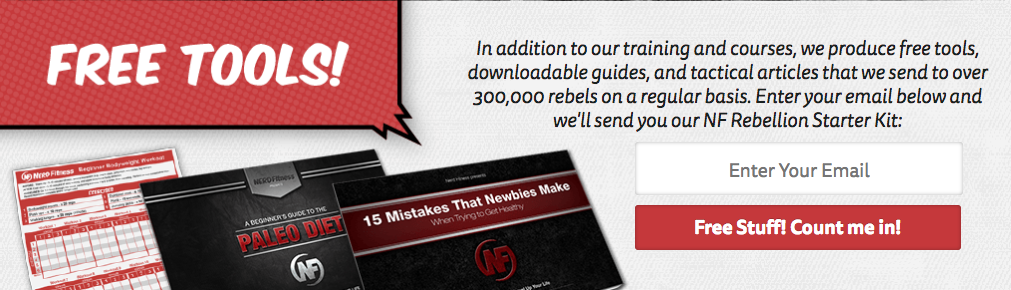
1. Create a lead magnet people actually want

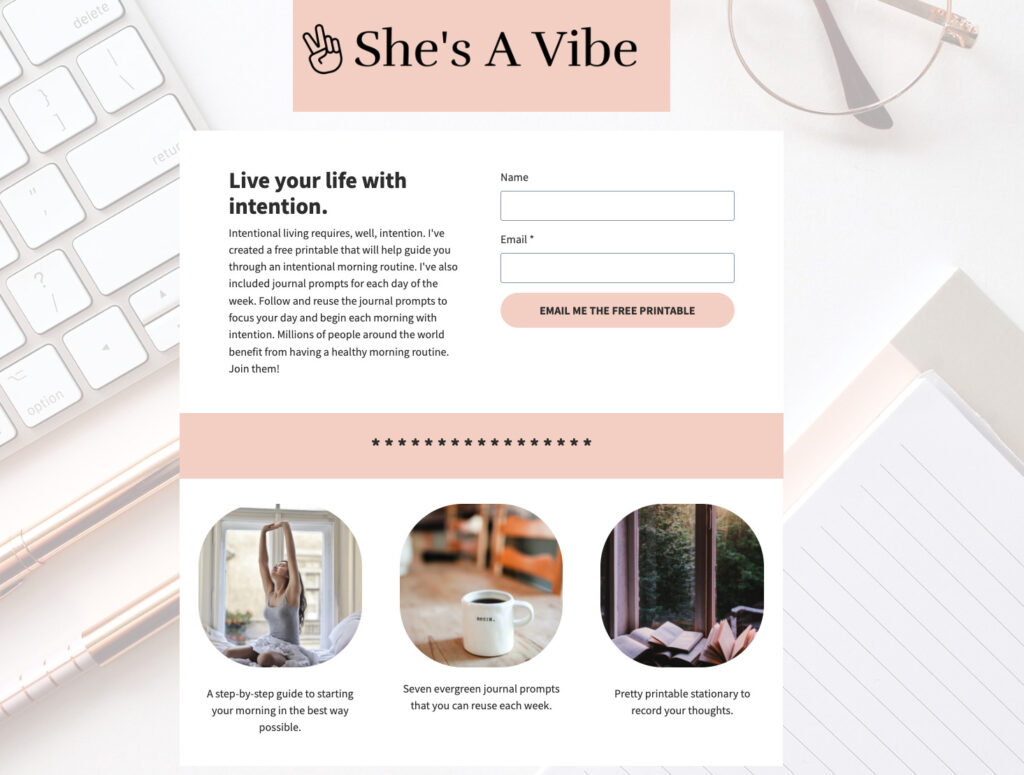
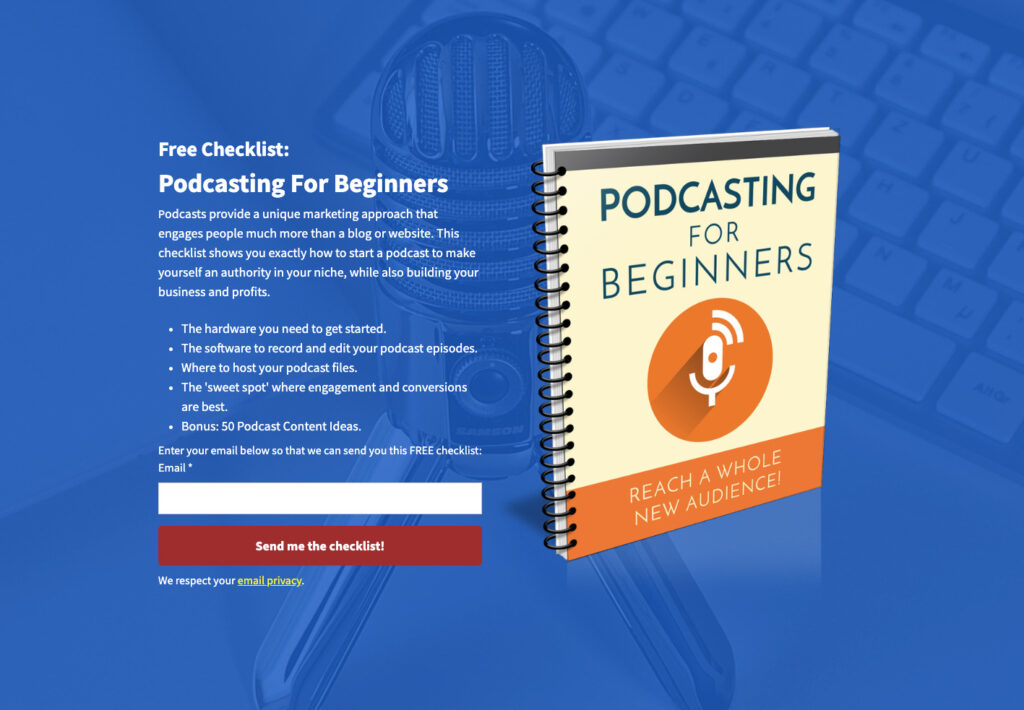
A lead magnet is something valuable you offer in exchange for an email address. The key word is valuable. Generic ebooks and vague “newsletters” don’t convert. Specific, immediately useful resources do.

The highest-converting lead magnets solve one problem, fast. Think templates, checklists, calculators, and short guides. Not 40-page PDFs nobody will finish.

Examples that work well for small businesses:

  • A one-page checklist for a process your customers find complicated
  • A fill-in-the-blank email template for a common situation
  • A calculator that shows them a specific number (cost, ROI, time saved)
  • A short video walkthrough of something they’ve been stuck on

The more specific your lead magnet is to your audience’s exact situation, the higher your signup rate will be. “Social media checklist for salons” will outperform “social media checklist for small businesses” every time.


2. Place your signup form where people are already paying attention

Most businesses bury their signup form in a footer and wonder why nobody subscribes. Form placement matters as much as form copy.

The highest-converting locations:

  • Above the fold on your homepage, paired with a specific lead magnet offer
  • At the end of blog posts, when readers have just consumed your content and trust is high
  • On your About page, where people go specifically to learn more about you
  • Mid-article, right after you’ve introduced a problem your lead magnet solves
  • On a dedicated landing page with no distractions and one clear call to action

One thing to fix immediately: your CTA button copy. “Subscribe” and “Sign up” are weak. “Get the free checklist” or “Send me the template” tell people exactly what they’re getting. That specificity converts.


3. Use popups — but time them right

Popups work. The data is consistent on this. The problem isn’t popups. It’s popups that fire the second someone lands on a page before they’ve read a single word.

Timing changes everything:

  • Show a popup after a visitor has scrolled 50% to 60% down a page. They’ve demonstrated interest. Now offer them the logical next step.
  • Use exit-intent popups when someone is about to leave. A page-specific offer (“Before you go — grab the free checklist on this topic”) performs far better than a generic newsletter pitch.
  • On mobile, delay popups longer. Mobile users are more likely to bounce if interrupted too early.

Match your popup offer to the content on the page. A popup about your email marketing checklist on an email marketing blog post will convert. The same popup on your pricing page won’t.


4. Add content upgrades to your best blog posts

A content upgrade is a bonus resource tied to a specific blog post. If someone is reading your post on how to write a product description, offer them a set of fill-in-the-blank product description templates. The offer is directly relevant to what they’re already reading.

Content upgrades consistently outperform generic sidebar opt-ins because the offer matches the reader’s exact intent at that moment.

You don’t need to create a content upgrade for every post. Start with your three to five highest-traffic pages. Build the offer, add it mid-article and at the end, and measure the difference.


5. Capture emails at checkout

Every customer who buys from you is a warm lead for your email list. They’ve already decided to trust you with their money. Getting their email address at checkout is often as simple as asking.

Add an opt-in checkbox during the checkout process. Keep it opt-in (not pre-checked), this is both a legal requirement in many regions and a signal of respect that subscribers notice.

Your post-purchase thank you page is also one of the highest-converting places to grow your list. The customer is in a positive mindset right after buying. Offering exclusive content, early access to sales, or a loyalty program at that moment lands well.


6. Convert social media followers into subscribers

Social media followers are not your audience. They’re an audience you’re renting on someone else’s platform. One algorithm change can cut your organic reach in half overnight. Email subscribers are yours.

The most effective way to convert followers into subscribers is to give them something they can’t get on social media. Tease the content on your platforms, then deliver the full value via email.

Tactics that work:

  • Add a link to your lead magnet landing page in every bio (Instagram, TikTok, LinkedIn, X)
  • Promote subscriber-only content in your posts and stories
  • Run a short social media series that ends with “get the full guide by email”
  • Host a live session and direct attendees to your email list for the replay

Make your email list feel like the VIP section. Social media is the lobby.


7. Collect emails offline

This one is underused, especially by local businesses. If you have in-person interactions with customers — a retail store, a service business, an event booth, a restaurant — you have list-building opportunities that most online-only businesses can’t access.

Effective offline capture tactics:

  • A QR code at your point of sale, on receipts, or on table cards that links directly to a signup page
  • A paper signup sheet (yes, still works) at your register or front desk
  • Asking at the point of service: “Can I grab your email to send you [specific thing]?”
  • A signup sheet or QR code at local events, markets, or trade shows
  • Including a card with every order or service delivery that directs customers to a subscriber benefit

The key is giving people a specific reason to sign up in the moment. “Join our email list” is not a reason. “Sign up to get first access to new arrivals before they sell out” is.

When collecting emails offline, get explicit consent. Tell them what they’re signing up for. This protects you legally and builds a list of people who actually want to hear from you.


8. Run a contest or giveaway

A well-designed contest can grow your list significantly in a short time. The prize acts as a filter. Choose something your ideal customer wants, and you’ll attract ideal customers. Choose something generic (an iPad, an Amazon gift card), and you’ll attract bargain hunters who’ll unsubscribe the moment the contest ends.

For a service business, a free session or package works well. For a product business, a bundle of your best sellers. For a content business, exclusive access or a one-on-one consultation.

Promote the contest across social media, your existing list, and your website. Make email signup the entry requirement. After the contest, send a welcome sequence to new subscribers that reminds them why they joined and what to expect.


9. Partner with complementary businesses

Find businesses that serve the same customer you serve, without competing with you directly. A personal trainer and a nutritionist. A wedding photographer and a florist. A bookkeeper and a business attorney.

A simple co-promotion — each business recommends the other’s lead magnet to their own list — can put your offer in front of hundreds of pre-qualified people quickly. No ad spend required.

Guest blog posts, podcast appearances, and joint webinars work on the same principle. You borrow another audience’s trust for a moment. If your content is good, a portion of that audience joins your list.


10. Use a referral program

Your existing subscribers are your best recruiters. They already know the value of being on your list. Give them a reason to share it.

A simple referral program can be as basic as: “Forward this to a friend who’d find it useful, and I’ll send you both [bonus resource].” More structured programs use tools like SparkLoop or ReferralHero to track referrals automatically.

The businesses that grow their lists fastest are the ones that turn subscribers into advocates. That only happens if the content you send is worth sharing.


11. Optimize your email signature

Your email signature reaches people who already have a relationship with you: clients, vendors, collaborators, prospects you’re actively talking to. A simple line — “P.S. I send weekly tips on [topic]. Join here: [link]” — converts consistently because the context is warm.

This requires no new content and no ad spend. It’s a set-it-and-forget-it addition that compounds over time.


12. Create a dedicated landing page for each lead magnet

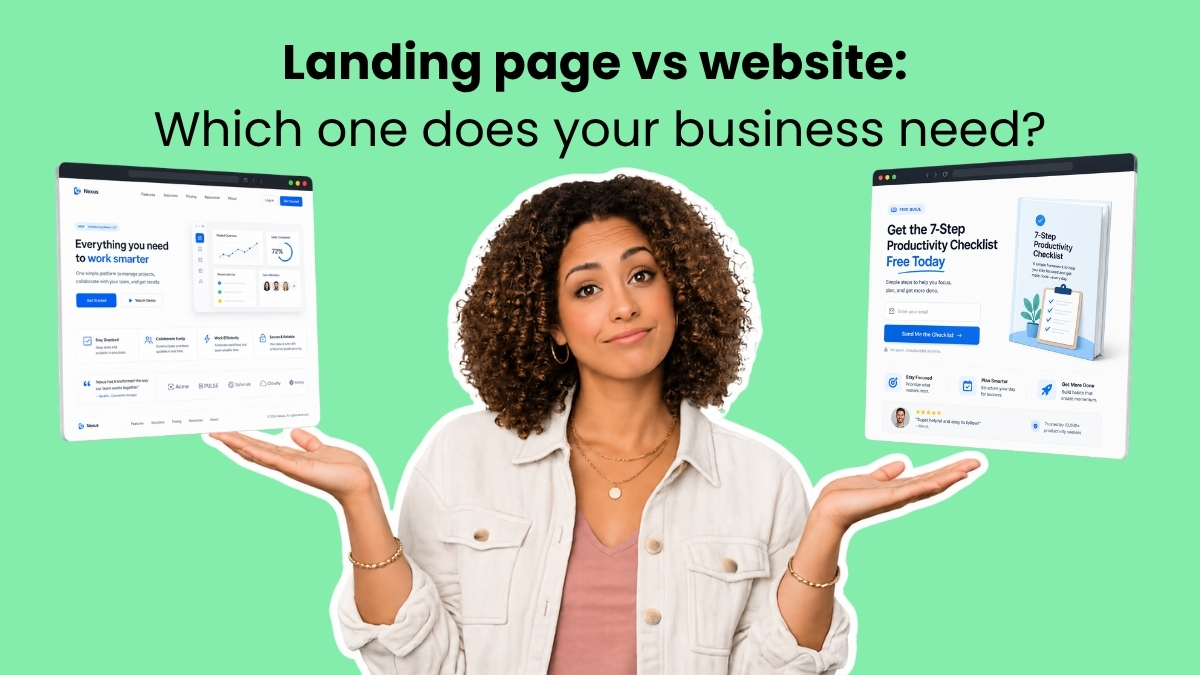
A homepage with a signup form in the sidebar is not a landing page. A landing page is a standalone page with one goal: get the visitor to sign up. No navigation. No other offers. No distractions.

When you run any promotion — social media, a guest post, a partnership — send traffic to a dedicated landing page for that specific lead magnet. Removing distractions consistently increases conversion rates.

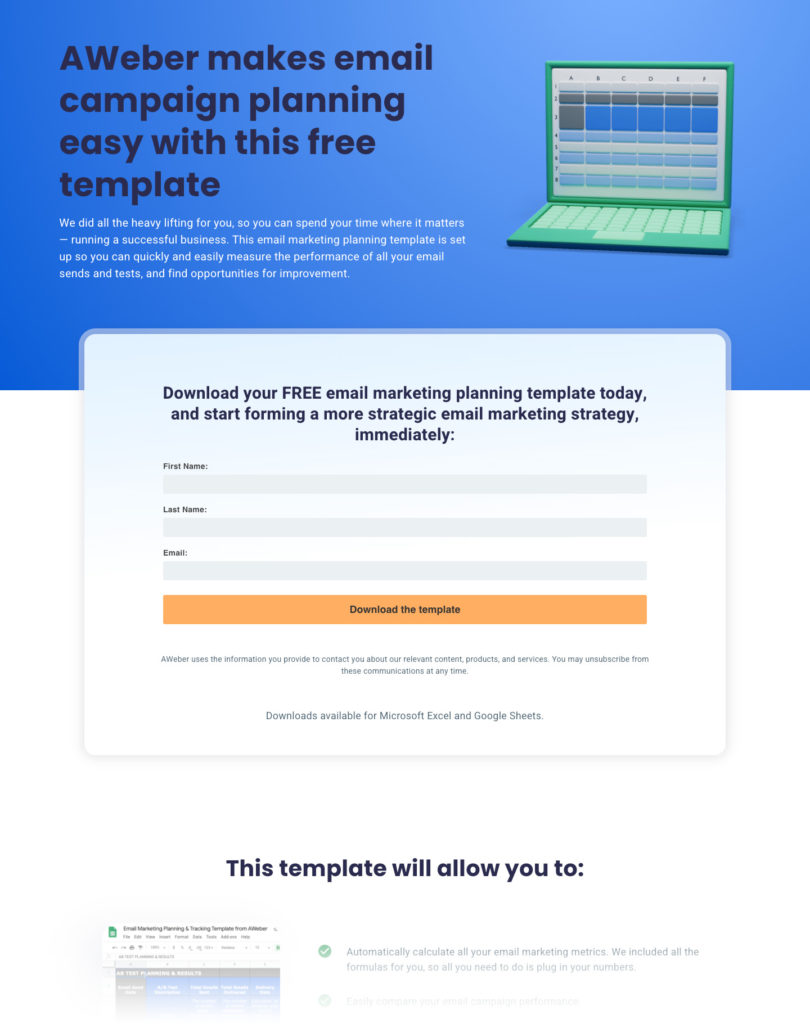
AWeber’s landing page builder lets you build these pages inside your account. No separate tool needed.


What not to do: the purchased list problem

Buying an email list is not list building. It’s renting a list of people who never asked to hear from you.

The consequences are serious:

  • High spam complaint rates that damage your sender reputation
  • Deliverability problems that affect every email you send, including to your real subscribers
  • Potential CAN-SPAM and GDPR violations that carry significant penalties
  • Near-zero engagement, because these people have no idea who you are

There’s no shortcut here. Every subscriber on a strong list opted in. That permission is what makes email marketing work.


How to comply with email marketing laws

Two laws govern most email marketing for small businesses: CAN-SPAM (United States) and GDPR (European Union). If you sell internationally, you may also encounter CASL (Canada) and similar laws in other markets.

The basics that apply to almost everyone:

  • Only email people who opted in to receive emails from you
  • Include a clear unsubscribe link in every email
  • Honor unsubscribe requests immediately
  • Include your physical mailing address in every email
  • Don’t use misleading subject lines or sender names

For GDPR specifically: if you have subscribers in the EU, you need explicit, documented consent. Pre-checked boxes don’t count. “I agree to receive marketing emails” needs to be a deliberate action.

AWeber handles the technical compliance pieces — unsubscribe links, confirmed opt-in, and physical address fields — automatically.


How to measure list building performance

Growing your list matters. Growing it with the right people matters more. Track these metrics:

Subscriber growth rate. New subscribers added per month, minus unsubscribes. Aim for consistent growth, not just spikes from campaigns.

Signup conversion rate. The percentage of page visitors who subscribe.

List engagement rate. Open and click rates tell you whether your list is healthy. A list full of unengaged subscribers hurts your deliverability. If engagement is low, a re-engagement campaign or a list clean is the fix.

Subscriber source tracking. Know where your best subscribers come from. UTM parameters and AWeber’s subscriber tagging let you track which lead magnets, pages, and channels drive the most engaged subscribers — not just the most subscribers.


Start with one strategy, not all twelve

The fastest way to get stuck is to try to implement everything at once. Pick the strategy that fits where you are right now.

If you don’t have a lead magnet: create one this week. A one-page checklist on a topic you get asked about constantly is enough to start.

If you have a lead magnet but low signups: fix your form placement first. Moving a signup form from a sidebar to the end of a blog post can double conversion rates with zero additional effort.

If you have a decent online list but no offline capture: add a QR code to your point of sale today. Print it out. Tape it up. See what happens.

The businesses that build the strongest email lists don’t use all twelve strategies at once. They build one channel, make it work, and then add the next.


Frequently asked questions

How many subscribers do I need before email marketing is worth it?

You can start email marketing with a list of 10 people. What matters is that they opted in and want to hear from you. A small, engaged list outperforms a large, unengaged one every time. AWeber’s free plan lets you send to up to 500 subscribers at no cost, so there’s no reason to wait.

How long does it take to build an email list?

Most small businesses see meaningful traction within 90 days if they launch one lead magnet, optimize their signup form placement, and send consistently. Growth accelerates once you have more touchpoints in place. Expect 6 to 12 months to build a list that generates reliable revenue.

Can I buy an email list to get started faster?

No. Purchased lists damage your sender reputation, produce near-zero engagement, and risk legal penalties under CAN-SPAM and GDPR. Every email you send from a damaged sending domain — including to your legitimate subscribers — is affected. The only way to build a list that works is to earn it.

What’s the difference between a subscriber and a contact?

A contact is anyone in your email platform. A subscriber is someone who has actively opted in to receive emails from you. Only subscribers should receive marketing emails. The distinction matters legally and for deliverability.

How often should I email my list?

Enough to stay top of mind, not so often that people tune out. For most small businesses, once a week or twice a month is a good starting cadence. Consistency matters more than frequency. Pick a schedule you can maintain.

What should my first email to new subscribers say?

Send a welcome email the moment someone subscribes. Deliver what you promised (the lead magnet, the discount, the resource), introduce yourself briefly, and tell them what to expect from future emails. Welcome emails average open rates 4 times higher than regular campaigns — use that attention well.

The post How to Build an Email List for Your Small Business appeared first on AWeber.

How to Build an Email List for Your Small Business Read More »
Email Marketing Best Practices for Coaches: Proven Strategies to Fill Your Calendar

Email Marketing Best Practices for Coaches Proven Strategies to Fill Your Calendar

You’re great at transforming lives through coaching, but finding clients who are ready to invest? That’s a different challenge. What if you could wake up to discovery call requests from people who already trust your expertise and understand your value—without spending hours on social media or chasing cold leads?

While algorithms hide your social posts and paid ads drain your budget, email puts you directly in front of people who’ve already raised their hands and said they want to hear from you. It’s one of the most cost-effective ways to build a sustainable coaching practice.

Here are the email marketing strategies successful coaches use to build waiting lists, nurture prospects, and convert subscribers into high-value clients. You’ll learn exactly how to turn your email list into a predictable revenue stream for your coaching business.

Build Your List with Lead Magnets That Attract Your Ideal Coaching Clients

Your email list starts with a compelling reason for someone to subscribe. Generic “join my newsletter” requests don’t work—you need a lead magnet that solves a specific problem your ideal client faces right now.

The most effective lead magnets for coaches provide immediate value while demonstrating your unique approach:

Assessment tools and quizzes

A career coach might offer a 5-minute readiness quiz. A business coach could offer a growth potential assessment.

Actionable checklists

Think “10-Point Leadership Assessment,” “Weekly Self-Care Checklist for Busy Executives,” or “Pre-Launch Business Readiness Checklist.” These show prospects you understand their challenges while previewing how you work.

Mini email courses

Deliver value over several days while building relationship momentum with an email mini course. A 5-day course on career clarity or confident decision-making keeps you top of mind and demonstrates expertise.

Case studies and success stories

Show your potential clients that your methods work. Success story ideas include: “How Sarah Transitioned From Corporate to Consulting in 90 Days” or “The Framework That Helped 12 Coaches Double Their Rates” builds credibility through real results.

Templates and frameworks

Provide practical tools prospects can use immediately. Share your goal-setting template or planning worksheet. It’s a taste of what working with you actually looks like.

The key is making your lead magnet hyper-specific to the transformation you help clients achieve. Instead of “10 Productivity Tips,” try “The 3-Step Morning Routine High Performers Use to Reclaim 2 Hours Daily.” Specificity attracts the right people and filters out those who aren’t a good fit.

We make it easy to create and deliver lead magnets through our landing page builder, which includes templates specifically designed for coaches and service providers. Once someone downloads your lead magnet, our automation tools deliver it instantly while adding them to your email sequence.

Create Welcome Sequences That Build Trust From Day One

Your welcome sequence is your first real conversation with potential clients. This automated series of emails (typically 5-7 messages) introduces who you are, shares your approach, and starts addressing the challenges they’re facing.

A strong welcome sequence for coaches follows this structure:

Email 1 (Immediate):

Deliver your lead magnet and set expectations. Thank them for subscribing, provide immediate access to what they requested, and tell them what to expect from you: “You’ll hear from me each Tuesday with strategies for [specific outcome]. No fluff—just practical advice you can implement right away.”

Email 2 (2 days later):

Share your story and philosophy. Help them understand why you do this work and what makes your approach different. Vulnerability works here—many successful coaches share their own struggles and breakthroughs. “I spent five years climbing the corporate ladder before realizing I was heading in the wrong direction” resonates more than credentials alone.

Email 3 (4 days later):

Provide immediate value beyond your lead magnet. A quick tip or framework that addresses a common challenge proves you’re here to help, not just sell.

Email 4 (7 days later):

Address a common objection or hesitation. What stops your ideal clients from getting the results they want? Maybe it’s “I don’t have time for coaching” or “I’ve tried getting help before and it didn’t work.” Tackle this head-on with empathy and insight.

Email 5 (10 days later):

Share social proof through testimonials, case studies, or results you’ve helped others achieve. Specific numbers and outcomes work better than vague praise: “Maria went from 3 clients to a waiting list in 90 days” is more compelling than “clients love working with me.”

Email 6 (14 days later):

Make a soft offer or invitation. This might be booking a discovery call, joining a free workshop, or checking out your group program. The key is making it feel like a natural next step rather than a sales pitch.

Our AI Writing Assistant helps you create these welcome emails quickly by generating content based on your coaching niche and target audience. You can customize the suggested copy to match your voice, then set up the entire sequence to run automatically—greeting every new subscriber without any manual work on your part.

For more strategies on converting subscribers through automation, check out our complete breakdown of email automation for coaches.

Segment Your List to Send More Relevant, Personalized Messages

Not everyone on your list is at the same stage or interested in the same transformation. Segmentation lets you send targeted messages that feel personally relevant to each subscriber.

For coaches, effective segmentation might include:

By coaching specialty interest:

If you offer career coaching, business coaching, and executive coaching, tag subscribers based on which opt-in they chose or which links they click in your emails. Someone who downloads your “Career Transition Guide” gets different follow-up content than someone who grabbed your “Executive Presence Framework.”

By readiness level:

Some subscribers are actively looking for coaching now. Others are researching for the future. Track behaviors like discovery call bookings, program page visits, or specific email engagement to identify hot leads versus nurture-mode subscribers.

By past interactions:

Tag people who’ve attended your workshops, replied to your emails, or engaged with specific content topics. These behavioral signals help you personalize future messages.

By client type:

If you work with both individual clients and corporate contracts, segment these audiences to send relevant content to each group. A corporate decision-maker needs different messaging than someone investing their own money.

Tagging and segmentation tools in AWeber work without technical expertise. Tags can be applied automatically based on signup form selections, link clicks, or landing page visits.

Send Consistent Value-Driven Content Your Subscribers Actually Want to Read

Once you’ve welcomed new subscribers and segmented your list, your regular email content keeps you top-of-mind and positions you as the obvious choice when they’re ready to invest in coaching.

87% of brands consider email marketing essential for business success, and for coaches, consistent communication is how you build the trust required for high-ticket service purchases. Here’s how to make your regular emails valuable rather than promotional:

Lead with practical value

Your subscribers should think “I got something useful from this” not “I just got sold to.” Share frameworks, ask powerful questions, bust myths, or provide tools they can apply immediately. Save direct promotion for one email in every five or six.

Tell stories that illustrate transformation

Coaching is about change, so show what that change looks like. Share anonymized client breakthroughs, your own learning experiences, or case studies that demonstrate specific outcomes. Stories make abstract concepts concrete and help prospects visualize working with you.

Address real objections and hesitations

Your ideal clients have doubts: “Will this actually work for me?” “Is this the right time?” “Can I afford it?” Use your regular emails to work through these concerns with empathy and insight—not by dismissing them but by understanding where they come from.

Keep a conversational, authentic tone

Write like you’re talking to one person, not broadcasting to a crowd. Skip the corporate speak and formal language—your emails should sound like you talking over coffee, sharing insights that genuinely help.

Maintain consistency without overwhelming subscribers

Most coaches find success with one email per week. That’s frequent enough to stay top-of-mind without becoming noise. Tuesday and Thursday mornings often see strong engagement, but test what works for your specific audience.

Our AI-Generated Newsletter writer actually studies your past emails and website content to learn your voice, then automatically drafts weekly newsletters that sound like you. This tool is perfect for coaches who want consistency without spending hours writing each week—you review and customize the draft, then send.

Automate Strategic Workflows That Move Prospects Toward Booking

Email automation transforms how you nurture leads and convert prospects into clients. Instead of manually following up with every inquiry or remembering to check in with past clients, automated workflows handle these crucial touchpoints while you focus on delivering transformation.

The three most powerful automation workflows for coaches are:

Post-Discovery Call Nurture Sequence

Many coaching prospects need multiple touchpoints after a discovery call before committing. An automated follow-up sequence keeps the conversation going:

  • Immediately after call: Send a thank-you email with key discussion points and your program overview
  • 2 days later: Share a relevant case study or testimonial from someone with similar goals
  • 4 days later: Address common objections (“How do I know this is the right investment?”)
  • 7 days later: Provide additional value through a helpful resource related to their specific goals
  • 10 days later: Make a direct invitation to enroll with a clear next step

This sequence keeps you present without being pushy, and it runs automatically based on a tag you add after discovery calls.

Engagement-Based Campaign Series

When subscribers show specific interest by clicking certain links or downloading particular resources, trigger targeted follow-up sequences. For example:

  • Someone clicks your “work with me” link → receives a 3-email series about your coaching approach, client results, and booking process
  • Someone downloads a specific lead magnet → gets a customized series related to that topic with a relevant program offer
  • Someone attends your webinar → enters a sequence designed specifically for webinar attendees

Re-Engagement Campaigns for Inactive Subscribers

When subscribers stop opening your emails for 60-90 days, trigger a re-engagement campaign. This might include your best content from recent months, a quick survey asking what they’d like to learn about, or a special offer to reconnect. Give them an easy path back to engagement—or let them unsubscribe if they’re no longer interested. A smaller, engaged list outperforms a large, inactive one.

Our visual automation builder makes it easy to create these workflows without technical skills. You can see the entire customer journey, add branching paths based on subscriber actions, and update campaigns without disrupting what’s already running. Plus, our Calendly integration automatically triggers sequences when someone books or completes a discovery call.

Use Strategic Timing and Calls-to-Action That Actually Convert

Even perfectly crafted emails fail if your timing is off or your calls-to-action are unclear. Here’s what works for coaching businesses:

Include one clear call-to-action per email.

Don’t ask subscribers to follow you on social media, download a resource, AND book a call in the same message. Pick the most important next step and make it obvious. Use button elements (which we include in our drag-and-drop email builder) rather than plain text links—they’re impossible to miss and drive higher click-through rates.

Make calls-to-action benefit-focused rather than transaction-focused.

Instead of “Book Your Discovery Call,” try “Claim Your Spot for a Free Strategy Session” or “Let’s Map Out Your Next 90 Days.” Frame the action around what they’ll receive, not what you’re asking them to do.

Time your promotional emails strategically.

Most coaches find success with a launch model: provide consistent value-driven content, then run a focused promotional campaign (usually 5-7 emails over 7-10 days) when you’re enrolling new clients. This concentrated promotion works better than constant selling while maintaining trust during your regular content delivery.

Test send times based on your audience.

Professional audiences often engage well with Tuesday-Thursday morning emails (6-9am their time zone). But test what works for your specific subscribers—our built-in analytics show you exactly when your emails get the highest open and click rates.

Use scarcity and urgency authentically.

If you genuinely have limited coaching spots or enrollment closes on a specific date, communicate that clearly. Artificial scarcity damages trust, but honest limitations (“I only work with 8 clients at a time”) create appropriate urgency for prospects who’ve been considering working with you.

Put These Email Marketing Strategies Into Action

The coaches building sustainable practices use email to create predictable revenue without constant social media hustle or cold outreach. It’s not about converting everyone immediately. It’s about building relationships with the right people until they’re ready to invest.

Start with these immediate action steps:

  1. Create one specific lead magnet that solves a clear problem your ideal coaching clients face
  2. Set up a 5-7 email welcome sequence that introduces your approach and builds trust
  3. Send one value-packed email per week to stay top-of-mind with your subscribers
  4. Automate your post-discovery call follow-up sequence so no prospect falls through the cracks
  5. Segment your list to send more targeted, relevant content based on subscriber interests and behaviors

Ready to implement these strategies without getting overwhelmed by technical setup?

Our Done For You service builds your complete email marketing system including custom template, automated sequence, landing pages, and integrations in just 7 days for $79.

You provide details about your coaching business through a quick questionnaire, and our team handles everything else.

Or build it yourself with a platform designed for coaches who want professional results without a steep learning curve.

Get started today and transform how you attract, nurture, and convert coaching clients through email marketing.

The post Email Marketing Best Practices for Coaches: Proven Strategies to Fill Your Calendar appeared first on AWeber.

Email Marketing Best Practices for Coaches: Proven Strategies to Fill Your Calendar Read More »